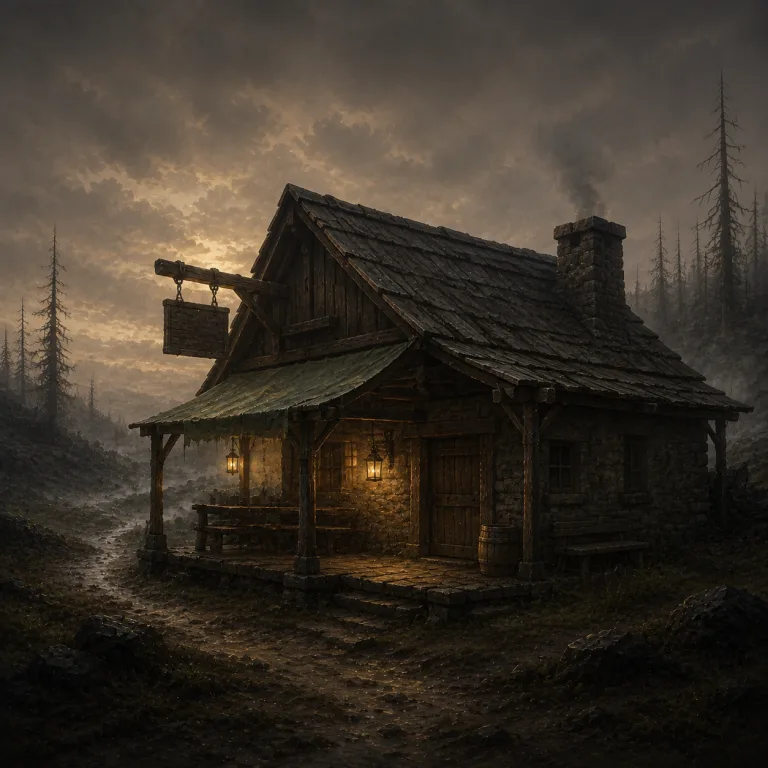
What buildings are for
On larger screens, Research and Construction site sit side by side in the bastion overview, followed by Training and Missions. Each panel has a Manage link; Construction site opens Buildings. On mobile, the panels are stacked.
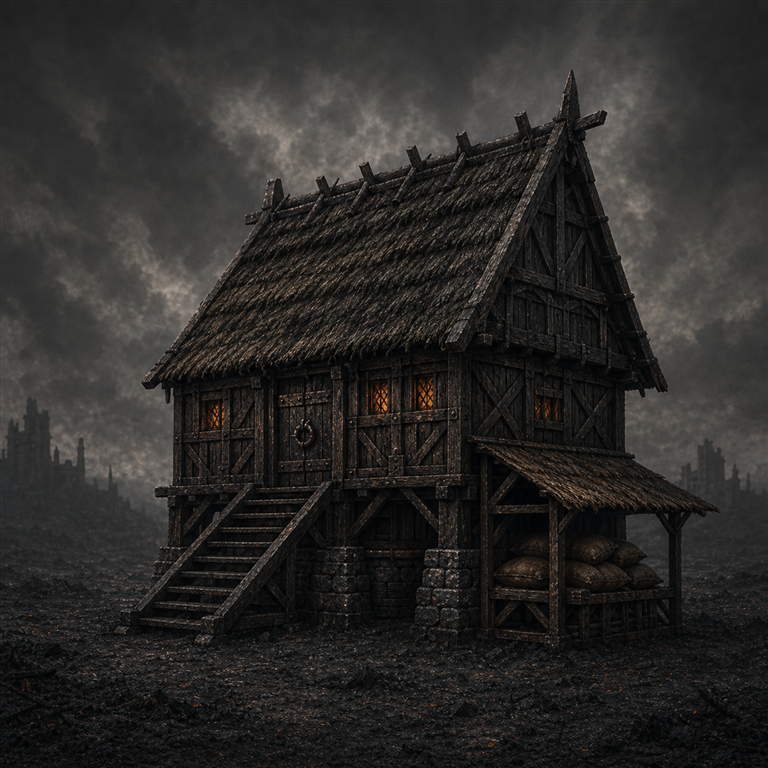
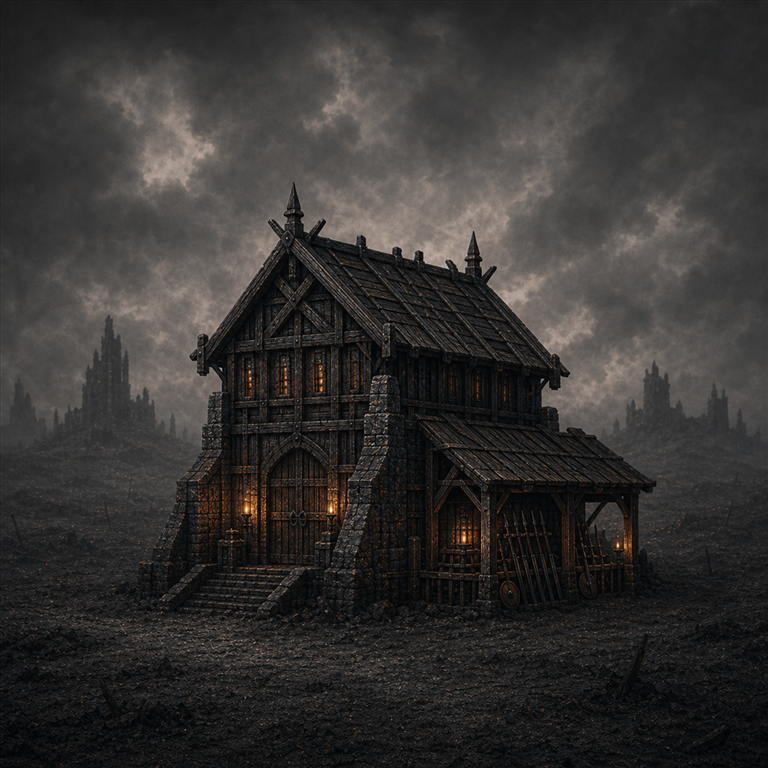
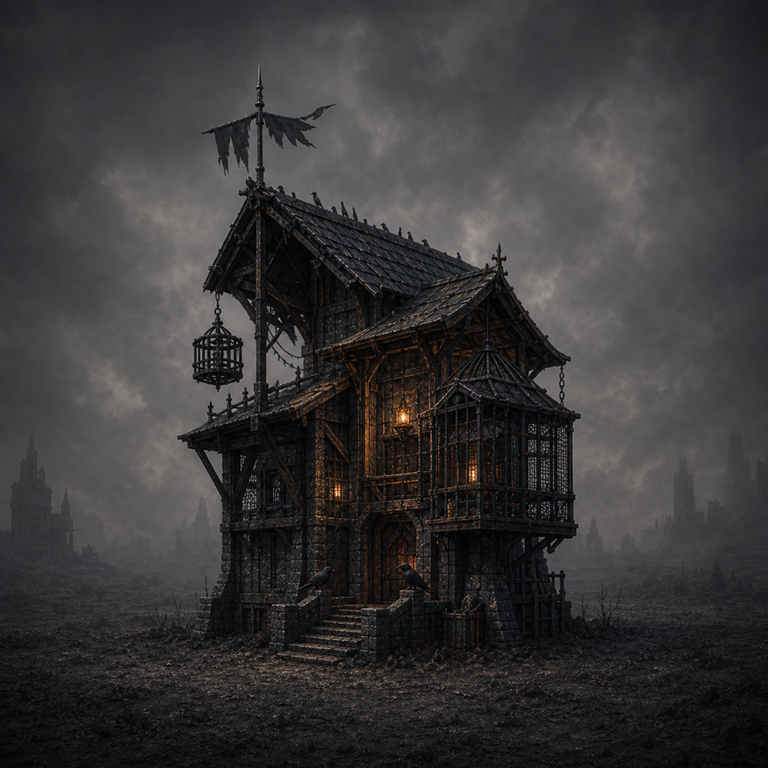
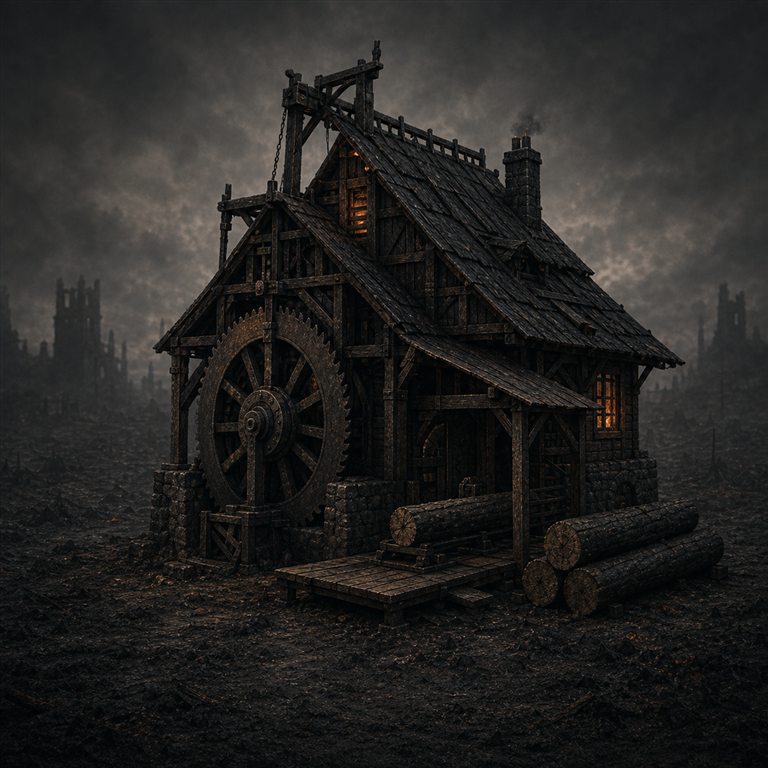
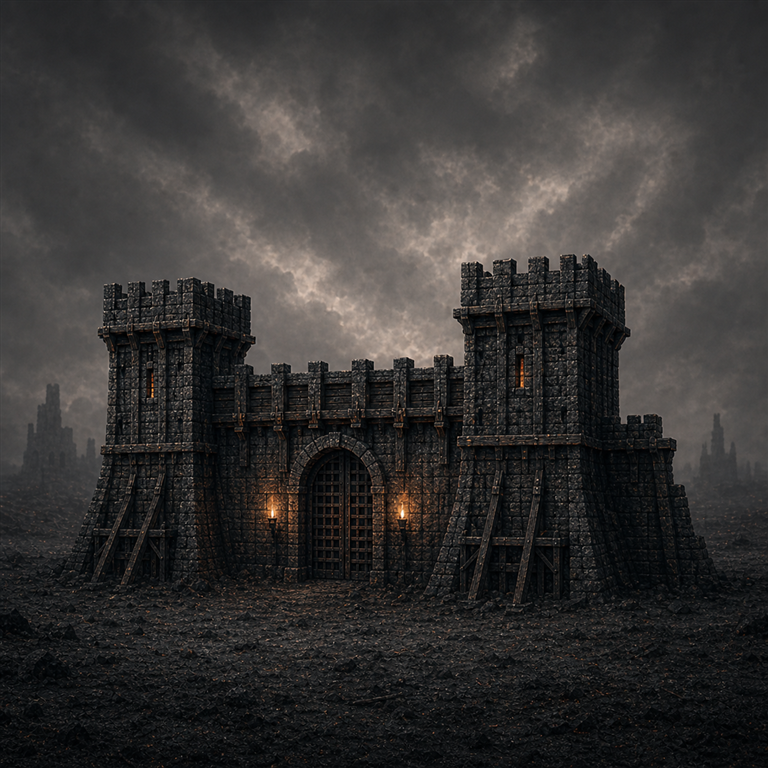
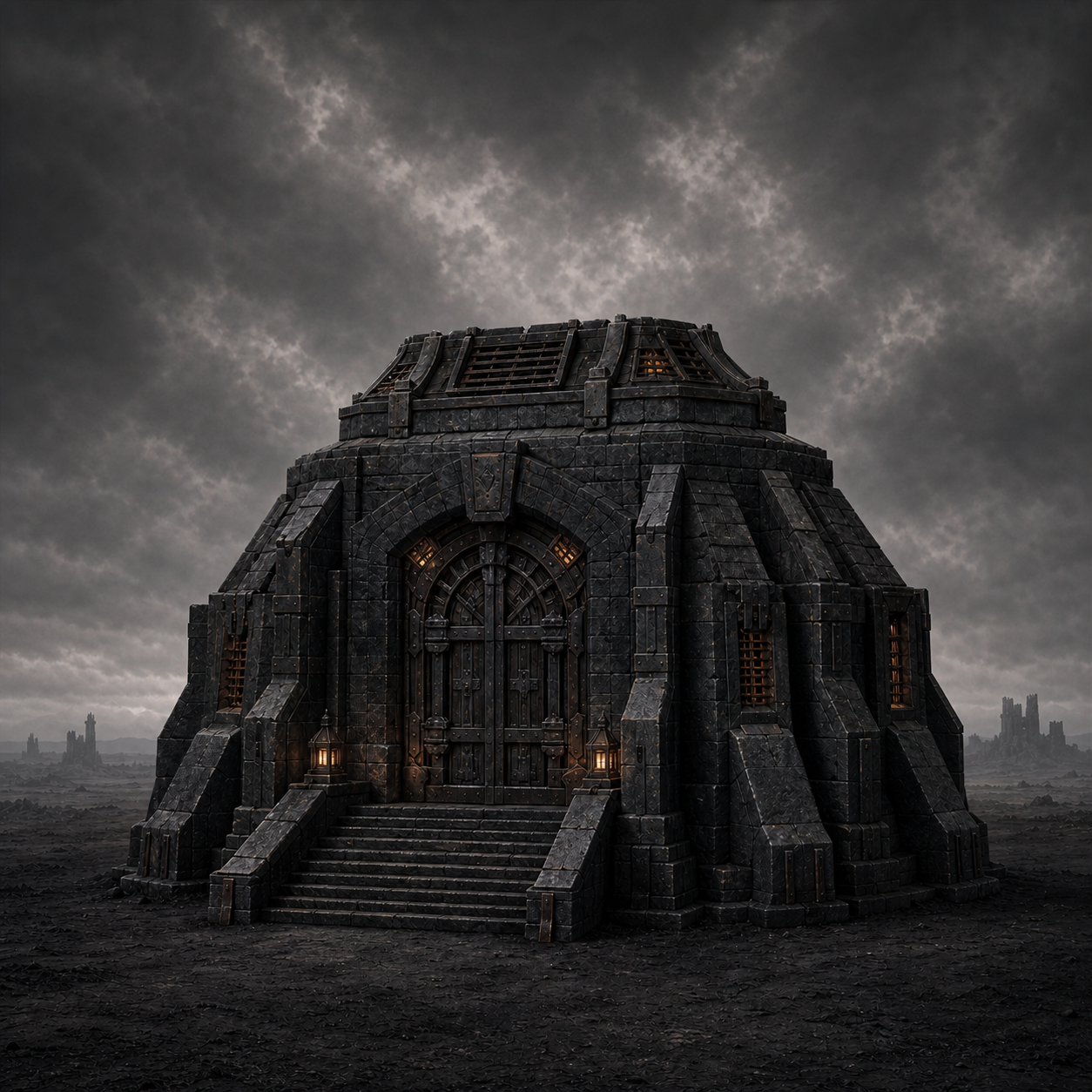
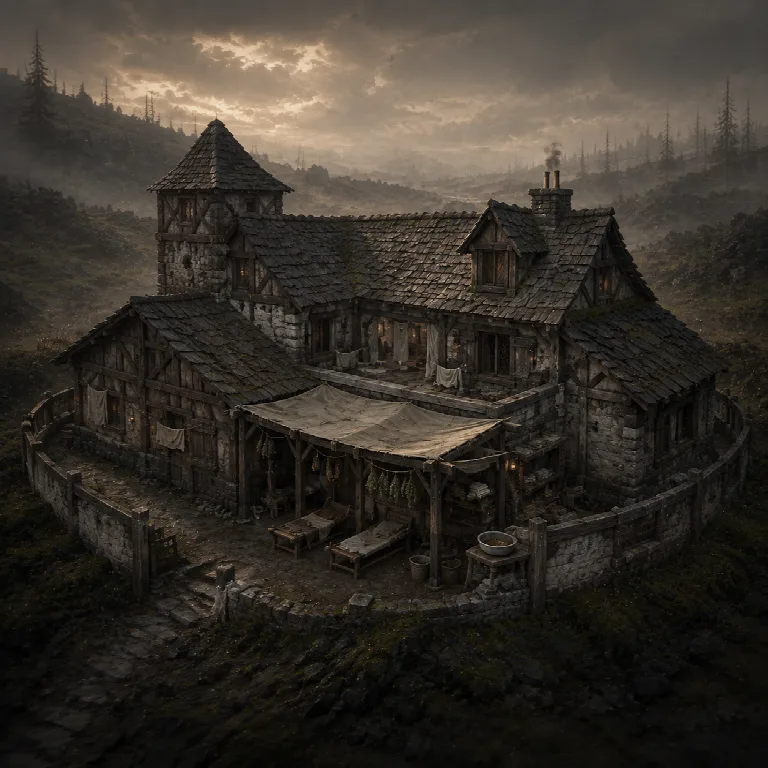
The bastion overview shows compact building cards with artwork for its people, plus the name and level over a dark gradient. The Tavern image matches its current level. Manage opens the construction and upgrade page.
A bastion is more than a resource pile. Its buildings define what the player can sustain: production, storage, defense, detection, training and sometimes broader action limits.
Upgrading a building is therefore a pacing choice. Storage protects production spikes, military structures prepare conflict, and specialized buildings open more precise tactical windows.
The Barracks increases simultaneous training queues the same way the Keep increases construction queues: the same unit cannot be queued twice in parallel, but several unit types can train when slots are available.
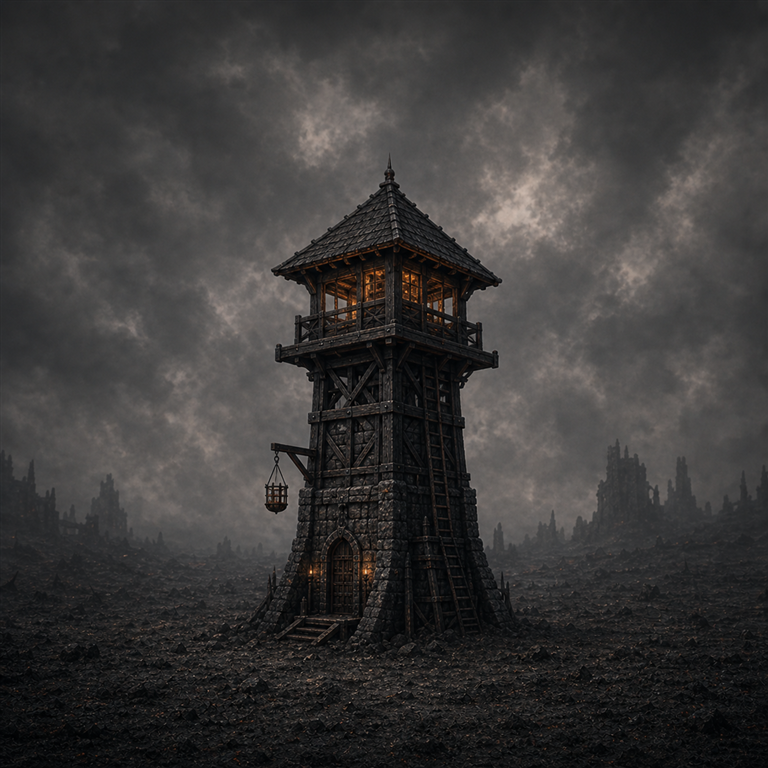
The Ravenry supports offensive intelligence: level 1 unlocks Scouts, then every additional level reduces their training time and spy mission duration within the configured caps. Every two levels after the first also grants +1 report intelligence level. The Watchtower keeps the opposite role: defensive detection, alerts and counter-intelligence.
Production buildings use a quadratic progression: their hourly base is multiplied by level², making advanced levels meaningfully more profitable.
Produced resource fractions are retained until they form a whole unit: frequent refreshes no longer reduce production. Storage capacities and the finite resource stocks of outposts remain the applicable limits.
Warehouses increase each resource storage with a quadratic progression: base storage + bonus × level².
The local Infirmary
Starting care, cancelling it and confirmed abandonment update the Infirmary and resources without reloading the page. Active treatments group the portrait, remaining quantities, next healing time and cancellation in a compact card. Validation errors keep the form intact; after a connection interruption, refresh the Infirmary before another action.
The Infirmary opening button appears after construction in the bastion being viewed. At level 0, the card says “Infirmary not built”. The capacity example is below the level table.
Medical points measure the space occupied by wounded troops: 100 points can hold 100 wounded troops at 1 point each or 50 at 2 points each. The bastion card states whether the Infirmary is built and compares levels in a table: capacity in points, parallel care queues and the maximum percentage of eligible losses that can be recovered, limited by available capacity.
Bastion services shows local medical capacity, the details by level and access to care when the world enables it. The Infirmary opens in a dialog within the bastion, keeping treatment, cancellations and confirmation messages there. Compact cards display the unit portrait and per-unit resource icons, with resource names on hover, focus or touch. The Max button selects the number of unreserved wounded troops that the bastion resources can cover, up to 100,000 units per treatment. The Buildings page is used to construct and upgrade the Infirmary.
The Infirmary is an optional building available only in worlds that allow it before opening. It can be built in every bastion, capital or colony, initially requiring Barracks level 2. Its initial maximum level is 5.
Prepared medical capacity is 100, 250, 500, 800 and 1,200 points at levels 1 to 5. Planned values are 1, 1, 2, 2 and 3 simultaneous treatments and 5, 10, 15, 20 and 25% recovery. Each bastion has its own local capacity; allies do not share it.
Wounded troops and care require separate activation before the world is announced. Without it, building an Infirmary prevents no losses. Worlds that are already open retain their version.
Compatible combat includes bastion, outpost, tower and foundation camp raids, plus passage and anchor assaults. Scenario, expedition, espionage, sacrifice and administrative losses are excluded. Only trainable units in the world's captured medical catalog can recover; auxiliaries, Explorers, Carts and Ballistas are excluded.
For each origin bastion, unit type and side, potential wounded troops equal losses multiplied by the local level's recovery rate at combat, rounded down. Capacity is allocated by alphabetical unit key: archer, ash_priest, bastion_guard, cavalry, fallen_knight, militia, raider, scout. Overflow becomes permanent deaths. Wounded troops no longer fight or contribute to power.
Initial medical weights are 1 point for Militia, Raiders, Bastion Guards, Archers and Scouts, 2 for Fallen Knights and Cavalry, and 3 for Ash Priests. Points remain occupied during evacuation, waiting and treatment. Each healed or abandoned unit frees its points; admitted wounded troops never expire.
Attackers wait until their mission's return time before treatment. Local defenders are available immediately. Garrisons return to their own bastion after the travel time preserved with their reinforcements, with a minimum of 60 seconds; merged garrisons retain the longest time. Allies cannot lend their level or capacity. The origin must still belong to the same owner in the same world.
Care initially costs 40% of each training resource and takes 50% of base training time. Resource costs round up per unit before multiplying by quantity. Per-unit duration rounds up after world training speed, without Ravenry or other training bonuses; accelerated test timers still apply. Treatment does not require satisfying training prerequisites again. Costs, base times and medical weights are captured when the world opens; the paid price and effective duration are then preserved in each treatment.
The player voluntarily starts each treatment and pays upfront. One unit returns at each treatment interval, before the entire batch finishes. Cancellation first resolves mature treatments, then fully refunds the remaining units, which become available wounded troops again. Abandonment requires confirmation and permanently removes only unreserved wounded troops, with no refund. These operations cannot transfer or duplicate units.
Vacation: mature treatments resolve before freezing; remaining queues resume after remobilization with their remaining duration. Treatment and abandonment are forbidden during vacation, epilogue and archiving. Reports distinguish total losses, permanent deaths, evacuated wounded and deaths from capacity overflow. Wounding, healing and abandonment award no Honor, distinction or reward; medical statistics are descriptive and preserved in archives. NPCs use the same calculations and costs.
Initial costs are 400 food, 900 dark wood, 600 iron and 100 essence, with a 1.70 cost multiplier per level. Initial duration is one hour with a 1.60 multiplier per level, before normal construction modifiers. Settings are administrable for future worlds and provide an initial balance baseline for the arrival of care.
When opening, the world preserves Infirmary capacities, prerequisites, level cap, costs and durations. Later template changes affect neither its construction nor refunds. Existing worlds do not gain this building retroactively. NPCs follow the same construction rules.
The capital Tavern and Heroes
The Tavern groups its level and occupied slots in a compact line. “Your heroes” shows the Heroes recruited in this world. Beside “Current candidates”, the “i” button shows base probabilities by level, before guarantees, on hover, touch or keyboard focus. Smaller cards retain their effects, costs and recruitment actions.
On large screens, cards use four columns with taller portraits. Capital relocation has a button in the header. Candidate refresh displays a circular arrow, its price and the Obol image; its tooltip explains the action and cost.
The Recruit button is disabled when capital resources do not cover the candidate’s price, including when viewing the Tavern from a colony. Unaffordable resource costs appear in red; their tooltip shows the missing amount.
The Hero’s type is emphasized below the portrait. Rarity appears in a badge at the top right: silver for Common, blue for Rare and purple for Illustrious. Recovery rules are detailed in the Hero wounds and treatment chapter and are no longer repeated on cards. Candidate cards no longer show recruitment duration; the countdown remains visible after recruitment starts.
Ongoing recruitment appears in a slim row below the portrait, with the remaining time on the right and a discreet cancel control. The face remains unobstructed.
The Tavern opening button appears after construction in the capital, including when viewing a colony. Until then, the card says “Tavern not built”.
Open the Tavern from Bastion services in either the capital or a colony. It opens in a dialog without changing the active bastion. Candidates are prepared with the bastion page and stay the same throughout the cycle. Recruitment and Hero treatment return to this dialog. The Buildings page provides Tavern construction and upgrades.
The capital is the Sovereign’s seat within a participation. Switching the active bastion only changes the town being viewed. The unique Tavern belongs to this capital; capital relocation requires a separate world opt-in. Its initial requirement is Keep level 3. Each Tavern level provides one slot, up to four Heroes including at most one Illustrious. Ongoing recruitment already reserves a slot.
Initial construction costs are 800 food, 1,200 dark wood, 500 iron and 150 essence. Costs increase by a factor of 1.80 and the two-hour base duration by 1.70, before normal construction modifiers. Each people has four Tavern illustrations.
Up to three personal candidates appear every 24 hours by default. Cycles are anchored to the world opening. Reloading the page or upgrading the building does not renew candidates. Refresh replaces the offers for 10 Obols, without moving the next automatic refresh or changing recruited or recruiting Heroes. An insufficient balance opens the Obol store without starting a payment. Recruitment still uses capital resources.
Manual refresh uses the current level probabilities, without applying or advancing automatic cycle guarantees. Recruited or recruiting Heroes are always excluded from candidates, regardless of their status. Identities absent from previous offers are preferred; a previous candidate may reappear if they are not in the roster. An identity never appears twice in one list. Previous offers can no longer be recruited; cancelling recruitment from a replaced list does not restore its candidate. A duplicate submission charges only once. Payment, consumed Obol lots and candidates are recorded together.
Assignment status, destination and countdown appear on the Hero portrait. Withdrawal remains available when commitment ends. Tavern history shows six events per page, from newest to oldest.
Base Common / Rare / Illustrious probabilities per candidate are 100 / 0 / 0% at level 1, 80 / 20 / 0% at level 2, 65 / 35 / 0% at level 3 and 65 / 30 / 5% at level 4. A Rare is guaranteed by the fifth eligible cycle without at least a Rare candidate; at level 4, an Illustrious is guaranteed by the tenth cycle without one. Only cycles actually presented count, even with a full roster. An owned or recruiting Illustrious suspends its guarantee and converts its probability to Rare. Automatic refreshes also exclude roster identities. If no eligible identity remains in a drawn rarity, the list may contain fewer than three candidates; no other rarity replaces that draw.
The initial catalog contains fifteen identities and portraits across five roles and three rarities. Common / Rare / Illustrious prices are 600 / 1,800 / 5,000 food, 300 / 900 / 2,500 dark wood, 200 / 700 / 2,000 iron and 100 / 400 / 1,600 essence. Recruitment takes one, three and six hours, divided by world training speed and rounded up. Accelerated test clocks still apply.
Each candidate displays identity, portrait, specialty, compatible actions, price and duration. The Recruit button starts recruitment directly at the displayed price, without an additional confirmation checkbox. Once recruitment starts, the candidate leaves the offer list and appears only in your Heroes. No replacement candidate is added before the normal refresh. Heroes gain neither levels nor experience. Command is enabled separately before the world announcement: without it, no Hero effect or assignment is available.
In worlds with command enabled, a Common or Rare Offensive Hero can lead a bastion raid. The initial 3 or 5% bonus applies only to the base attack of owned units. It adds to the doctrine without multiplying other bonuses and uses the remaining room under the command cap, initially 15%, limited by the Sovereign attack cap. A lower cap does not reduce the existing doctrine. Each contribution is rounded down.
A Common Explorer reduces effective travel time by 3% for ruin, cave, settlement and resource site expeditions. A Rare Explorer reduces it by 5% for ruins only. This reduction applies after other modifiers, on both outward and return journeys, rounded up to at least one second. Rewards and losses remain those announced for the contract.
Choosing a Hero is optional. The Hero departs from their current bastion and can lead only one mission at a time; a mission accepts only one Hero. Identity and effect are frozen at departure and preserved in the report. Recall keeps the Hero unavailable until the actual return, and a recalled expedition consumes neither rights nor rewards. Even after losing every troop, the Hero must travel home. Instant bastion relocation is unavailable.
Worlds using only the first command stage retain pilot raids and expeditions without additional recovery. A separate activation before a future world announcement enables other specialties and wounds under the rules below. Open seasons never receive these effects retroactively. New assignments are unavailable during vacation, epilogue and archive phases; states remain readable and assignments are preserved in the archive.
Payment uses capital resources even when viewing a colony. Submitting twice never recruits or charges twice. Cancellation before the deadline fully refunds the paid price and frees the slot. The candidate returns to the offers if their cycle has not expired, at the same price and without extending availability. A new recruitment starts again for its full duration. If the cycle has expired, the candidate does not return. Recruitment completes at its deadline. Only an available Hero can be dismissed after confirmation, permanently and without a refund.
Recruitments pause during vacation and resume with their remaining duration. Recruitment, cancellation and dismissal are unavailable during vacation, epilogue and archive phases. The roster and history are private; the archive retains identities and definitions without granting rewards or Honor. NPCs follow the same costs and limits, without automatic recruitment at this stage.
Activation and probabilities are configured before the world announcement. At opening, definitions, prices, durations and rules are frozen for the participation. Later administrative changes cannot alter existing offers or Heroes. Already open worlds without this feature retain their previous rules.
Hero assignments, specialties and treatment
From the bastion Tavern, Prepare an assignment opens a second dialog. Each destination shows outward travel, setup and minimum commitment. Assign starts the assignment directly, without a confirmation step. An inaccessible route disables this button. Closing the dialog returns to the Tavern. Dismiss opens a separate confirmation for the Hero’s permanent departure.
These rules require enabling other specialties before the world announcement. Initial Common, Rare and Illustrious effects are 3, 5 and 8%. Heroes remain optional and bound to one action or position. NPCs follow the same costs, capacities and delays.
A Common Defensive Hero protects only owned units in the assigned bastion. A Rare Hero protects owned reinforcements in the assigned garrison, without benefiting the host army or other players. An Illustrious Hero protects owned units at the assigned passage endpoints while their alliance controls it. Walls, fixed defenses and alliance presence are excluded. The bonus adds to base defense within the shared doctrine cap, initially 15%, without multiplication by walls or research.
A Common Productive Hero improves food, a Rare Hero iron and an Illustrious Hero essence in the assigned bastion. Only base building production receives the bonus, within the Sovereign production cap, initially 15%. Outposts, loot and rewards are excluded. The period starts when taking position and ends at withdrawal, even when resources are calculated later.
Fixed assignments require an accessible journey, then 30 minutes of setup and six hours of minimum commitment after taking position. Heroes initially travel at speed 8 under world travel rules. They cannot reinforce an attack that arrived before they took position, even if combat resolves later. Withdrawal ends the effect and requires returning to the home bastion. Wounds can force an early return.
A Common Logistic Hero increases base resource transfer capacity. Troops stay at the destination and the Hero returns alone. A Rare Hero can lead the reciprocal convoy when accepting a trade contract: required carts are recalculated and return with the Hero after delivery. An Illustrious Hero improves seasonal delivery capacity. Only capacity changes; research bonuses are not multiplied. Cargo and effect are frozen at departure and the Hero remains reserved until returning.
An Illustrious Offensive Hero leads structure assaults outside bastions: outposts, towers, foundation camps, passages and anchors. An Illustrious Explorer increases points from regional outpost, fortress, sanctuary or portal operations within the existing personal cap. Common and Rare specialties from the first command stage remain available.
Defeat or losing at least 50% of led troops causes a deterministic wound. Heroes cannot die or be captured. Natural recovery begins on return and initially lasts one, three or six hours by rarity. Total losses double this duration. Recall before combat causes no wound. The same public threshold applies to losses announced in expedition contracts.
The home Infirmary offers separate Hero treatment capacity: one, one, two, two and three treatments at levels 1 to 5. Care initially costs 40% of each recruitment resource, rounded up, and reduces remaining recovery time to 50%, rounded up with a minimum of one minute. Treatment requires at least two minutes of natural recovery remaining. Payment and capacity are reserved only once. Natural recovery continues without an Infirmary or an available slot.
Stopping treatment refunds each resource in proportion to unused time, rounded down within storage capacity. Interrupted care does not shorten the original natural recovery deadline. Vacation pauses both clocks and requires returning from fixed assignments first. Epilogue and archive phases forbid actions; archives preserve assignments, wounds, treatment and prices without creating extra score.
Heroes managed by NPCs
A future world can separately enable autonomous NPC Hero management before opening. It requires an enabled Tavern and command; positions, Illustrious specialties and treatment also require the corresponding advanced roles. Worlds already open retain their rules.
During the hourly pass, after their economy and before their offensives, NPCs may make one management decision. The initial minimum interval is one hour per participation and rerunning the pass cannot multiply purchases. Each purchase uses at most 50% of each available stock under the initial policy. The budget and interval can be configured before opening and are then captured in world rules.
NPCs build the required Keep and their Tavern using the same resources, prerequisites, construction slots and durations as players. Local, established and major categories target Tavern levels 1, 2 and 4 respectively. A queued construction cannot be completed by an instant economic upgrade. An Infirmary at level 1 and its prerequisites can then be built for Hero care.
Candidates come from the same personal deterministic offers, refreshes and guarantees. The Black Hand favors offense, the Watchers defense and the Hermits production. NPCs select an affordable, useful specialty without duplicating its purpose; roster slots, rarity restrictions and the one-Illustrious cap apply. They do not dismiss their Heroes to buy every new offer.
Productive and Common Defensive Heroes take a position in the capital with ordinary setup and commitment. Common and Rare Offensive Heroes may join bastion raids already chosen by the NPC; Illustrious Offensive Heroes may join its outpost and tower raids. Military reserves, target protection and offense limits still apply. A Hero never replaces the required troops.
A Hero remains unavailable during travel, the mission and the return journey. After an injury, the NPC may pay for care if its budget and a medical slot allow it; otherwise natural recovery follows its deadline. Prices, durations, caps and injuries are the same as for players. Roster assignments remain private except for information permitted in reports.
This first policy creates no new NPC expeditions, trades or external defensive positions. Explorers, Logisticians and Rare or Illustrious Defensive Heroes are therefore not recruited automatically. Closed seasons and unavailable participations no longer make management decisions.
Exceptional Sovereign and Hero repairs
An administrator can correct a missing or duplicate capital and resume a blocked assignment. Each intervention requires a reason and a preview of the state and consequences. The state is checked again when applying the action; an outdated preview must be reopened. The audit log records the administrator, reason and states before and after.
The correction restores a unique capital among owned bastions in the same world. If a Tavern exists or is being built, that bastion must remain the capital. Multiple Taverns are ambiguous. Buildings, resources, units and Heroes are not moved and the founding capital is preserved. This tool cannot transfer an already unique capital.
For a Hero, ordinary setup, mission and return deadlines are processed first. An incorrect state is matched to the actual action. A fixed position can be recalled after its minimum commitment and physical return remains mandatory. The Hero becomes available only after returning and any recovery; ongoing treatment is neither cancelled nor refunded by this tool.
Repairs reject closed worlds, archived or vacationing participations and ambiguous situations, including a missing original mission. They never return troops or cargo twice and never rewrite archives. Private assignment details remain restricted to authorized access.
Planning a construction queue
The costs and durations shown in the reference are the bases used by the server. Requirements explain why an upgrade may be unavailable even when the player has enough resources.
The “First objectives” group contains the Granary, Barracks, and Ravenry used by the first objectives that are still incomplete. Once their threshold is reached, the Granary moves to “Economy and reserves”, while the Barracks and Ravenry move to “Command and defense”. The next building useful for those first objectives is highlighted directly. The Ravenry requires a level 2 Granary; the Ash Altar a level 2 Keep; the Wall level 1 Barracks; the Watchtower a level 1 Ravenry; and the Ash Vault level 2 Warehouses.
When a construction end time has already passed, the page asks the server to catch the queue up instead of leaving an active job frozen at 00:00:00.
A quick navigation bar remains fixed below the resource bar while scrolling, with direct access to active construction, first objectives, economy, or command. The visible section is highlighted without changing construction order or rules.
Tip: check the role of a building before optimizing its level. An expensive but poorly timed upgrade can delay defense, research or expansion.
Warehouses that remain affordable
Each resource cost for a Warehouse upgrade is capped at 80% of the previous level’s base storage capacity, without alliance bonuses. Resource proportions are preserved and rounded up without exceeding the cap. Other buildings keep their usual progression.
New building queues record their paid costs. Cancellation returns those amounts even if prices change. Queues predating deployment retain the refund valuation available just before this update.